
Should you DIY your roof or hire a professional?
Ground-level tasks like clearing gutters and debris are fine to DIY. But walking the roof, sealing flashing, replacing shingles and any full replacement put your safety and warranty at risk and belong to a licensed, insured professional. The right call depends on the task, your comfort with heights, and the chance of making a leak worse.
New Roof Guide connects you with licensed local companies - we are not a contractor.
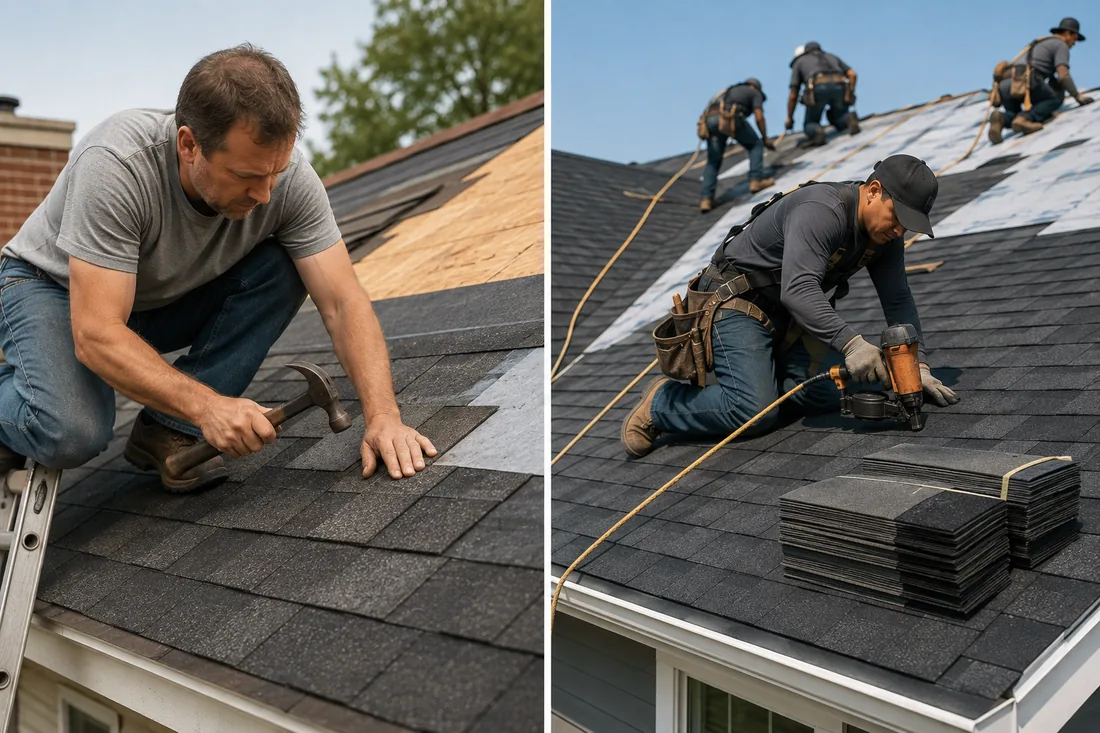 Draw the line
Which roof jobs are safe to DIY?
Stick to ground-level, low-risk tasks: clearing gutters from a stable ladder, removing branches and debris, and visual checks with binoculars or from the attic. Anything that requires walking the roof, sealing flashing or replacing shingles is safer - and usually cheaper over time - done by a professional.
| Task | DIY-friendly? | Why |
|---|---|---|
| Clearing gutters & debris | Usually yes | Ground/ladder work, low risk |
| Visual inspection from below | Yes | No need to climb the roof |
| Replacing a few shingles | Sometimes | Requires roof access & skill |
| Sealing or replacing flashing | Better as a pro | Common leak source if done wrong |
| Full replacement or storm repair | Hire a pro | Safety, warranty & watertightness |
Will DIY roof work void my warranty?
It can. Many manufacturer and workmanship warranties require professional installation, so doing the work yourself may forfeit coverage. Always check the terms before picking up a ladder, and keep documentation of any professional repairs to protect your warranty and your home’s resale value.
What do you get with a professional?
Licensed roofers bring the right safety equipment, warrantied materials, and the experience to get flashing and ventilation right the first time. They are insured, so a mistake is not your liability, and their work usually comes with a written warranty. For anything beyond ground-level upkeep, that protection is worth the cost.
Is it worth the risk to DIY a roof?
Falls from roofs cause serious injuries every year. If a job means walking a steep or wet roof, or if a mistake could turn a small leak into major water damage, the safe and often cheaper choice is a licensed, insured professional.
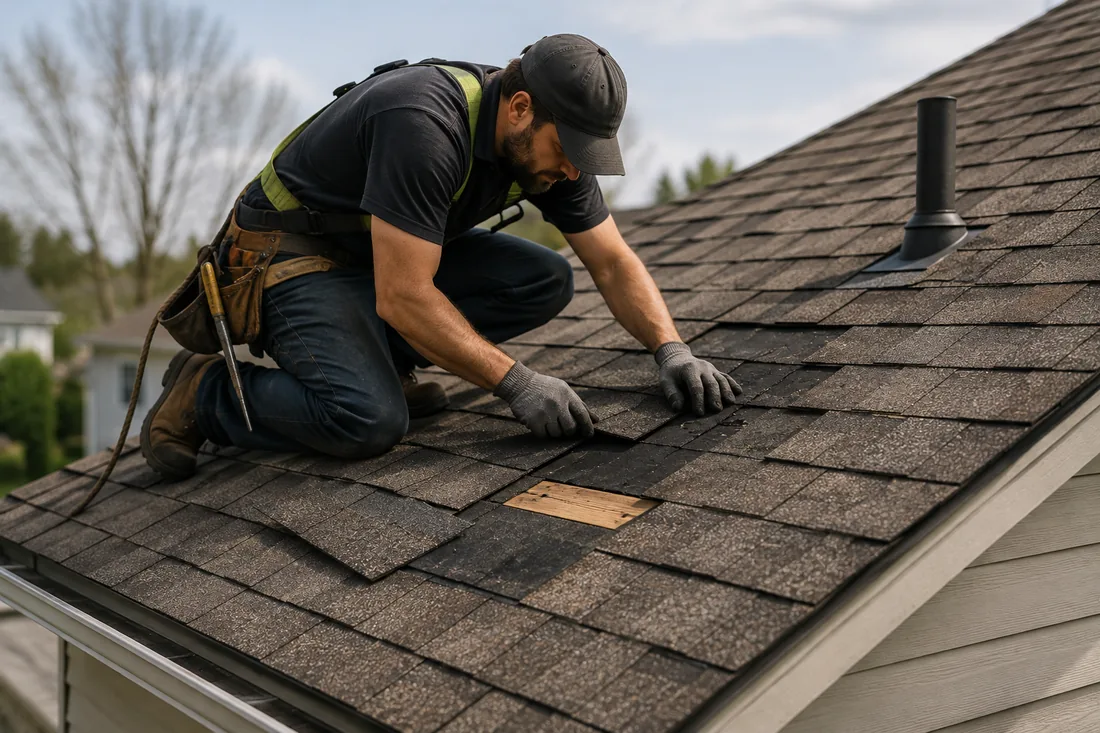
A full replacement is demanding, hazardous work involving heights, heavy materials and precise flashing. For most homeowners it is not worth the safety risk or the chance of voiding warranties.
Ground-level tasks: clearing gutters from a stable ladder, removing debris, and visual checks. Anything requiring roof access is safer with a professional.
It can. Many warranties require professional installation. Always check the terms before doing work yourself.
For anything beyond basic upkeep, yes - you get safety, warrantied materials, insurance cover and work that is watertight the first time.
Repair cost guides
Deeper guides on common repair jobs and their costs.
How was this guide put together?
This comparison reflects standard safety and warranty guidance for homeowners. We avoid universal cost figures because they depend on the job and your region.
- Basis - common safety and warranty considerations for roof work.
- Your decision - informed by a licensed contractor’s assessment of the specific job.
Last updated 19 August 2026. This is general guidance, not professional advice for your specific roof - always rely on a licensed contractor's assessment.
Get matched with a licensed local roofer
Tell us about your roof and we'll connect you with vetted contractors near you. Free, no obligation, and no pressure to commit.
- Licensed & insured local pros
- Free, no-obligation quotes
- Covering all 50 states