
What are the warning signs your roof needs attention?
The clearest warning signs are curling or missing shingles, granules collecting in gutters, water stains on ceilings, daylight in the attic, and a roof past its rated age. Any one warrants a professional inspection, which checks the surface, flashing, gutters and decking to catch problems before they become costly leaks.
New Roof Guide connects you with licensed local companies - we are not a contractor.
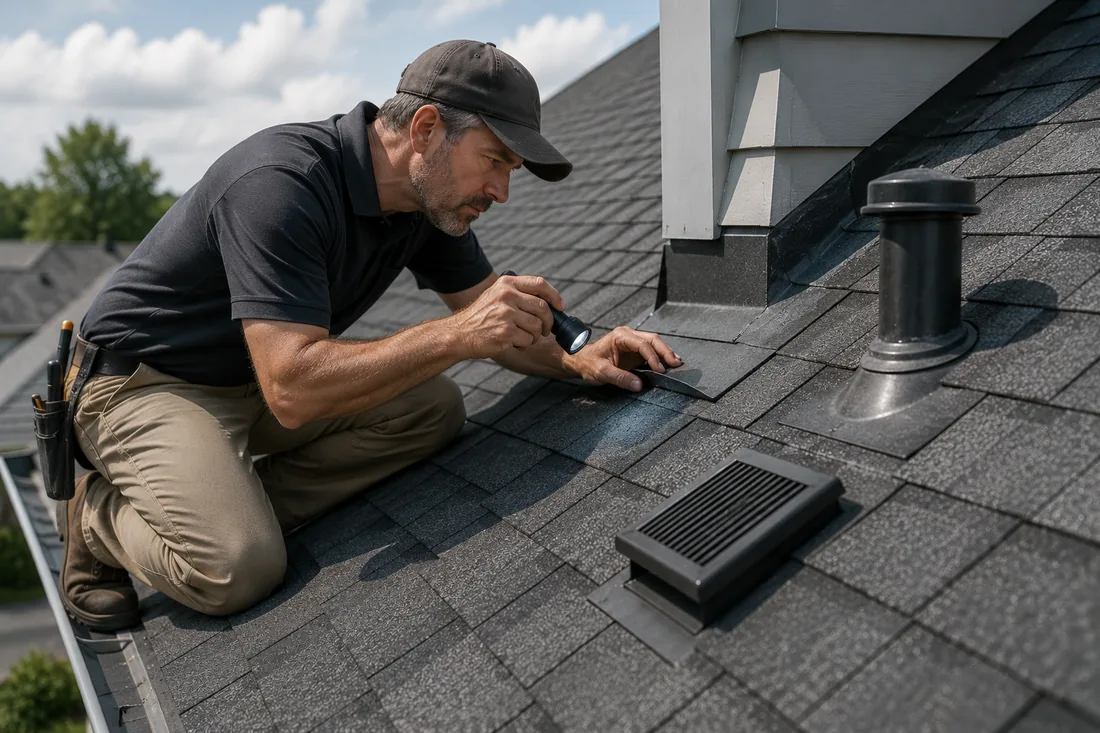 Catch it early
What are the first signs you need a new roof?
Look for five things you can spot from the ground or attic: shingles curling, cracking or missing; granules collecting in gutters; dark streaks or sagging areas; water stains on interior ceilings; and daylight showing through the roof deck. Any of these means it is time for a professional inspection before a small issue spreads.
- Curling & missing shingles - the seal has failed and water can get underneath.
- Granules in gutters - the protective surface is wearing away.
- Ceiling stains & attic daylight - water is already getting in.
What does a professional roof inspection check?
A thorough inspection covers far more than the shingles. A pro examines the roof surface, the flashing around chimneys, vents and skylights, the gutters and drainage, and the attic and decking from underneath for moisture, daylight and ventilation issues. The result is a clear picture of your roof’s condition and whether you need a repair or replacement.
How much does a roof inspection cost?
Many local contractors offer a free visual roof inspection, especially after storms. More detailed structural, drone or insurance inspections may carry a fee that varies by property and region. Always confirm what is included and whether there is any charge before you book. See our cost guide for the bigger picture.
How often should a roof be inspected?
A good rule is once a year and after any major storm. Catching a lifted shingle or failing flashing early costs a fraction of repairing the water damage it causes later. If your area was just hit by wind or hail, book an inspection even if the roof looks fine from the ground.

Common early signs include curling or cracked shingles, granules in gutters, water stains on ceilings, daylight in the attic, and shingles past their rated age. Any one is worth a professional inspection.
Once a year and after any major storm is a good rule. Early detection of small issues is far cheaper than repairing water damage later.
Many local contractors offer a free visual inspection, especially after storms. Detailed structural, drone or insurance inspections may carry a fee. Always confirm before booking.
You can spot many signs from the ground with binoculars or from inside the attic. Walking the roof is hazardous and best left to a professional who can safely check flashing and decking.
Roof inspection guides
Deeper guides on inspections and warning signs.
How was this guide put together?
This guide reflects widely accepted roofing inspection practices - what professionals look for on the surface, at flashing points, in gutters and from inside the attic. Specific findings and costs depend entirely on your roof, so we point you to a licensed inspector rather than quoting universal numbers.
- Basis - standard visual-inspection checkpoints and common warning signs.
- Your assessment - an on-site inspection by a licensed local contractor.
Last updated 19 August 2026. This is general guidance, not professional advice for your specific roof - always rely on a licensed contractor's assessment.
Get matched with a licensed local roofer
Tell us about your roof and we'll connect you with vetted contractors near you. Free, no obligation, and no pressure to commit.
- Licensed & insured local pros
- Free, no-obligation quotes
- Covering all 50 states